Materials
Why More Homeowners in Arizona Are Using Composite Instead of Wood

Materials
Why More Homeowners in Arizona Are Using Composite Instead of Wood
Materials
Why More Homeowners in Arizona Are Using Composite Instead of Wood
In Arizona, the outdoor living space is not just an extension of your home - it’s part of your lifestyle. Choosing the right decking material matters more here than almost anywhere else in the country.
When Arizona homeowners think about building or upgrading a deck, the first decision is often between traditional wood and modern composite decking. For decades, cedar and pressure-treated lumber were the standard. But as our extreme climate continues to push materials to their limits, composite products like Trex and TimberTech have increasingly become the material of choice.
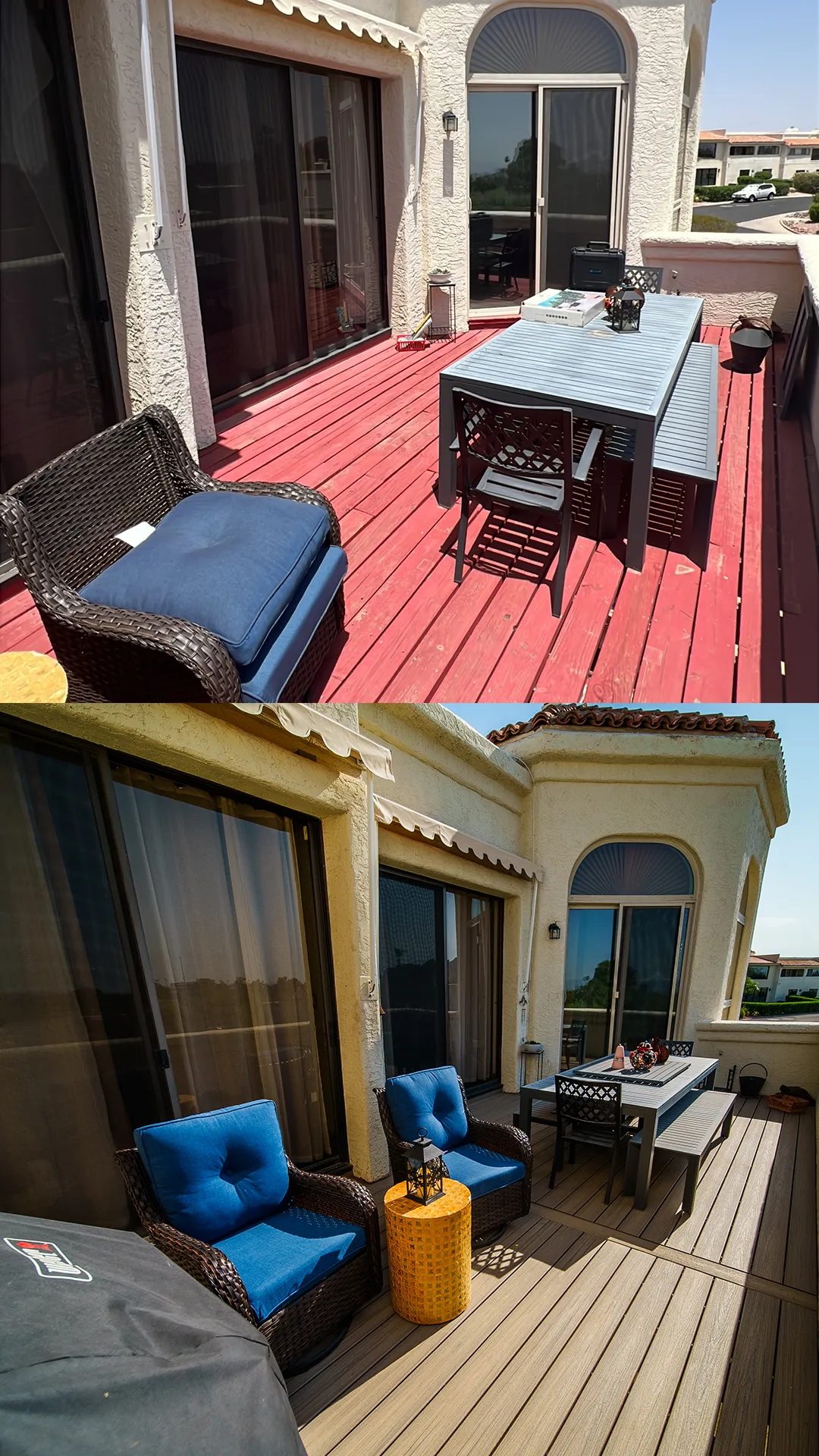
We’ve built many, many composite decks across Arizona - from the banks of Christopher Creek in Payson to rooftops in Tempe - and one thing is consistent: our clients are choosing composite decks because they understand wood simply cannot handle Arizona sun without significant annual maintenance that’s costly, both in time and materials.
The Problem with Wood Decking in the Desert
A wood deck in Arizona faces a tough combination of heat, UV exposure, and dryness. Even with regular maintenance, many homeowners see:
Cracking and splitting within the first few years
Severe fading from 110°+ summers
Warping and cupping as the boards dry out
Ongoing splinters, peeling, and structural inconsistencies
What starts as a “low-cost” material often becomes a high-cost commitment - annual sanding, staining, sealing, replacing damaged boards, and dealing with deterioration sooner than expected.
Why Composite Decking Performs Better in Arizona
Composite decking was engineered specifically to solve the durability issues natural lumber can’t overcome. Brands like Trex and TimberTech are made from 85%–95% recycled material, including wood fibers, reclaimed plastics, and polymer blends. These materials are combined, heated, and formed into boards designed for strength, stability, and longevity.
Unlike wood, every composite board is consistent from end to end. There are no knots, soft spots, or unpredictable grain patterns that lead to failure over time. The core is dense and moisture-resistant, offering protection against:
Intense heat
Rapid temperature swings
Termites
Monsoon humidity cycles
Freeze-thaw cycles in higher elevations like Payson or Flagstaff

The Cap Layer: The Differentiator
Where composite truly separates itself from wood is in the cap - a protective shell wrapped around the surface of the board.
This durable outer layer contains UV inhibitors, stain blockers, and scratch-resistant polymers that:
Keep boards from fading under desert sunlight
Prevent moisture from penetrating the surface
Resist stains from drinks and food
Provide a slip-resistant, barefoot-friendly texture
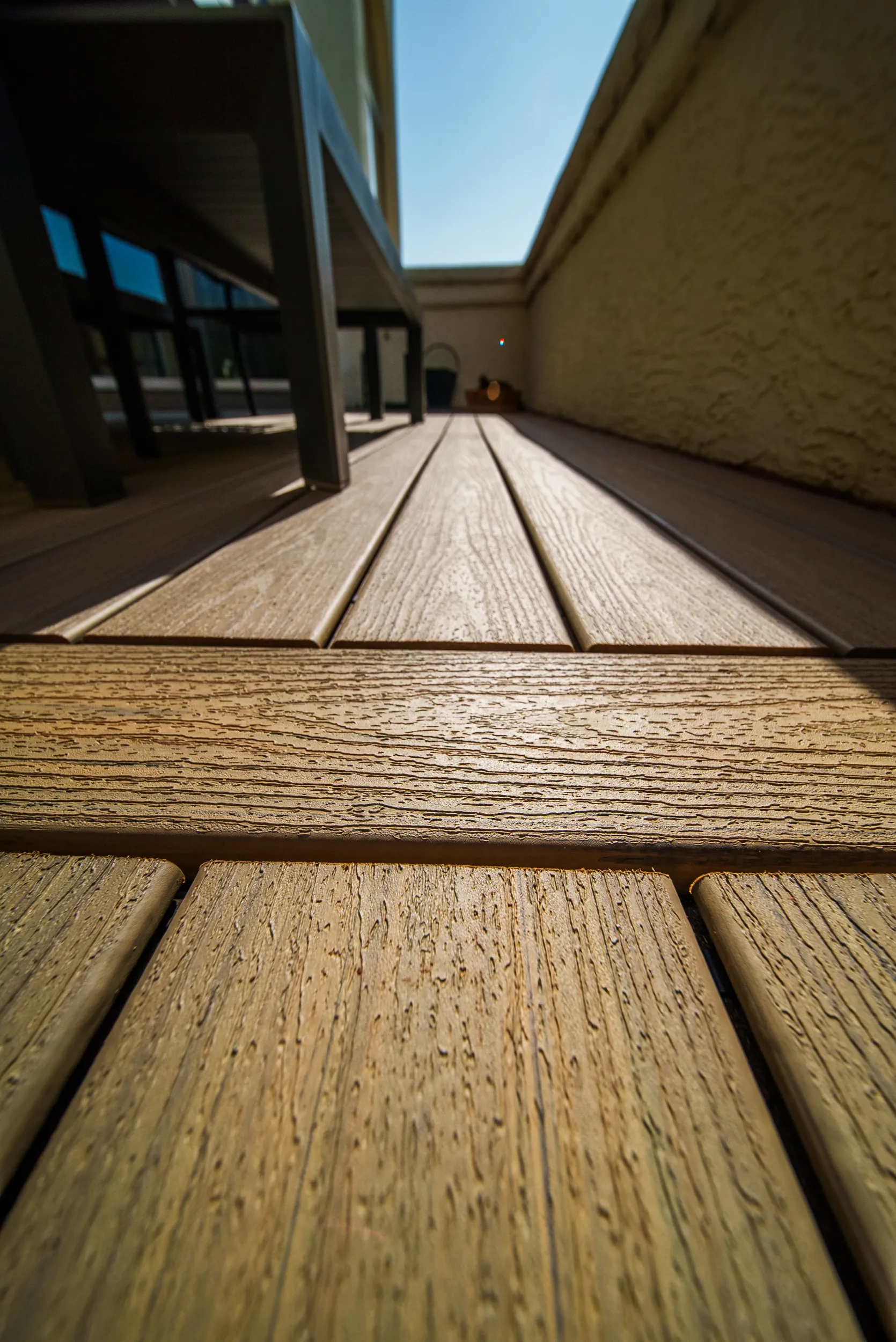
Maintain color and grain patterns for decades giving it a natural wood appearance
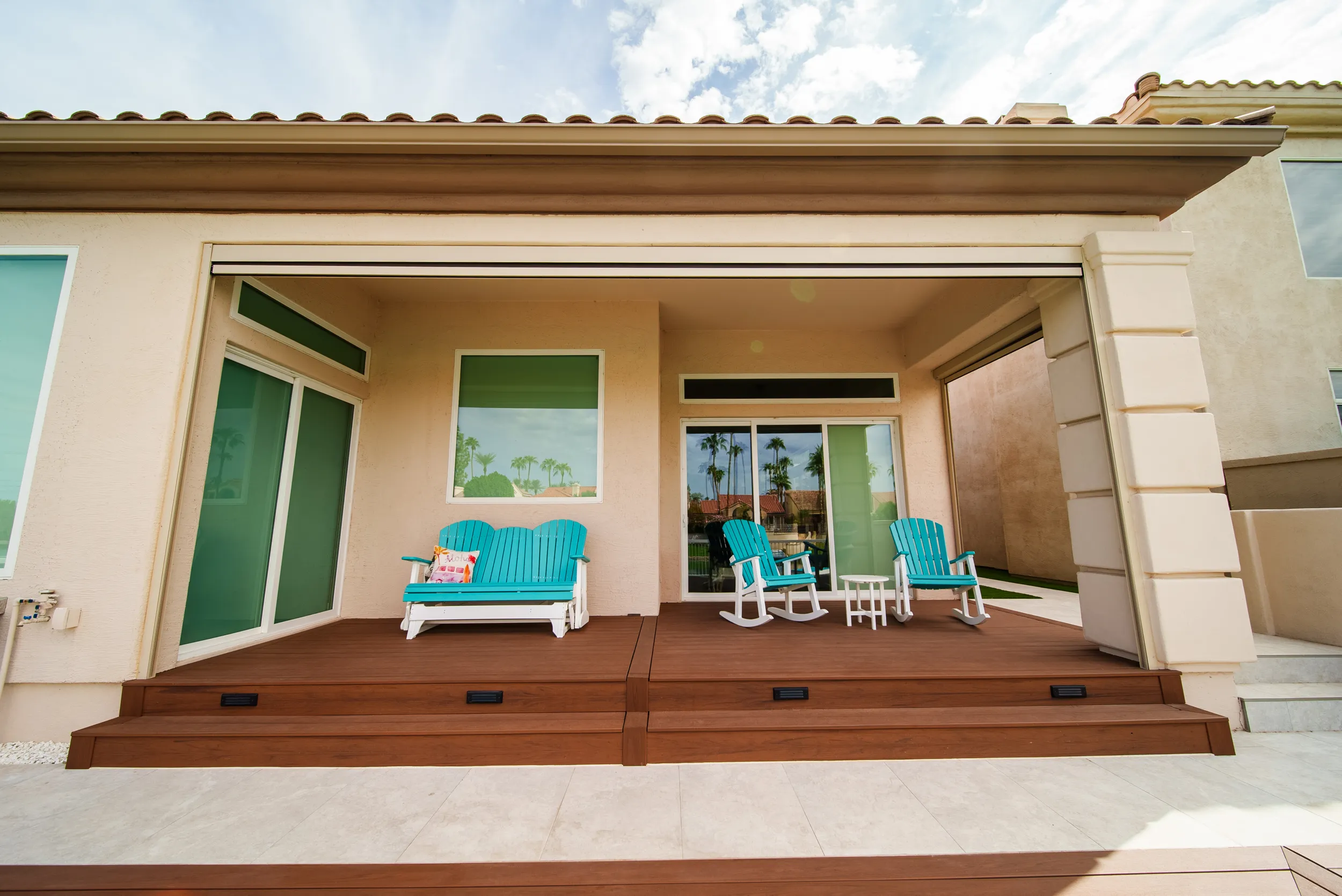
Trex and TimberTech offer options that range from clean, modern colors to richly variegated, natural-looking wood tones. And unlike lumber, these surfaces do not crack, splinter, peel, or rot.
Maintenance: Where Composite Saves You Time and Money
Composite decking requires almost no maintenance. There is:
No sanding
No sealing
No staining
No annual refinishing
To keep a composite deck looking nearly new, all you need is:
A garden hose to rinse away dust and dirt
Soapy water and a soft brush for occasional spills
Compare that to the yearly upkeep wood demands plus the replacement cycle every 7 to 10 years and composite quickly becomes the smarter financial decision.
Is Composite Decking Worth the Investment?
For Arizona homeowners, the answer is almost always yes.
It is true, composite does have a higher initial cost than wood. But when you consider:
Longer lifespan (with a 25-year to 50-year residential stain and fade warranty depending on the product line)
No annual maintenance costs
Higher home resale value
Better performance in extreme heat; using composite decking becomes a long-term upgrade to your home and lifestyle, not just another project.
Final Thoughts
More homeowners in Arizona are choosing composite decking materials instead of wood because of its durability in the heat, minimal maintenance, and natural wood-grain look. If you are considering replacing an existing deck or building a new deck, before going directly to wood, it’s well worth the time to consider using composite decking. While the initial upfront cost is higher than wood, in the long-term, given most composite decking materials’ 25 to 50 year limited residential warranty, often, composite is the more cost-effective option.
In Arizona, the outdoor living space is not just an extension of your home - it’s part of your lifestyle. Choosing the right decking material matters more here than almost anywhere else in the country.
When Arizona homeowners think about building or upgrading a deck, the first decision is often between traditional wood and modern composite decking. For decades, cedar and pressure-treated lumber were the standard. But as our extreme climate continues to push materials to their limits, composite products like Trex and TimberTech have increasingly become the material of choice.
We’ve built many, many composite decks across Arizona - from the banks of Christopher Creek in Payson to rooftops in Tempe - and one thing is consistent: our clients are choosing composite decks because they understand wood simply cannot handle Arizona sun without significant annual maintenance that’s costly, both in time and materials.
The Problem with Wood Decking in the Desert
A wood deck in Arizona faces a tough combination of heat, UV exposure, and dryness. Even with regular maintenance, many homeowners see:
Cracking and splitting within the first few years
Severe fading from 110°+ summers
Warping and cupping as the boards dry out
Ongoing splinters, peeling, and structural inconsistencies
What starts as a “low-cost” material often becomes a high-cost commitment - annual sanding, staining, sealing, replacing damaged boards, and dealing with deterioration sooner than expected.
Why Composite Decking Performs Better in Arizona
Composite decking was engineered specifically to solve the durability issues natural lumber can’t overcome. Brands like Trex and TimberTech are made from 85%–95% recycled material, including wood fibers, reclaimed plastics, and polymer blends. These materials are combined, heated, and formed into boards designed for strength, stability, and longevity.
Unlike wood, every composite board is consistent from end to end. There are no knots, soft spots, or unpredictable grain patterns that lead to failure over time. The core is dense and moisture-resistant, offering protection against:
Intense heat
Rapid temperature swings
Termites
Monsoon humidity cycles
Freeze-thaw cycles in higher elevations like Payson or Flagstaff
The Cap Layer: The Differentiator
Where composite truly separates itself from wood is in the cap - a protective shell wrapped around the surface of the board.
This durable outer layer contains UV inhibitors, stain blockers, and scratch-resistant polymers that:
Keep boards from fading under desert sunlight
Prevent moisture from penetrating the surface
Resist stains from drinks and food
Provide a slip-resistant, barefoot-friendly texture
Maintain color and grain patterns for decades giving it a natural wood appearance
Trex and TimberTech offer options that range from clean, modern colors to richly variegated, natural-looking wood tones. And unlike lumber, these surfaces do not crack, splinter, peel, or rot.
Maintenance: Where Composite Saves You Time and Money
Composite decking requires almost no maintenance. There is:
No sanding
No sealing
No staining
No annual refinishing
To keep a composite deck looking nearly new, all you need is:
A garden hose to rinse away dust and dirt
Soapy water and a soft brush for occasional spills
Compare that to the yearly upkeep wood demands plus the replacement cycle every 7 to 10 years and composite quickly becomes the smarter financial decision.
Is Composite Decking Worth the Investment?
For Arizona homeowners, the answer is almost always yes.
It is true, composite does have a higher initial cost than wood. But when you consider:
Longer lifespan (with a 25-year to 50-year residential stain and fade warranty depending on the product line)
No annual maintenance costs
Higher home resale value
Better performance in extreme heat; using composite decking becomes a long-term upgrade to your home and lifestyle, not just another project.
Final Thoughts
More homeowners in Arizona are choosing composite decking materials instead of wood because of its durability in the heat, minimal maintenance, and natural wood-grain look. If you are considering replacing an existing deck or building a new deck, before going directly to wood, it’s well worth the time to consider using composite decking. While the initial upfront cost is higher than wood, in the long-term, given most composite decking materials’ 25 to 50 year limited residential warranty, often, composite is the more cost-effective option.
In Arizona, the outdoor living space is not just an extension of your home - it’s part of your lifestyle. Choosing the right decking material matters more here than almost anywhere else in the country.
When Arizona homeowners think about building or upgrading a deck, the first decision is often between traditional wood and modern composite decking. For decades, cedar and pressure-treated lumber were the standard. But as our extreme climate continues to push materials to their limits, composite products like Trex and TimberTech have increasingly become the material of choice.
We’ve built many, many composite decks across Arizona - from the banks of Christopher Creek in Payson to rooftops in Tempe - and one thing is consistent: our clients are choosing composite decks because they understand wood simply cannot handle Arizona sun without significant annual maintenance that’s costly, both in time and materials.
The Problem with Wood Decking in the Desert
A wood deck in Arizona faces a tough combination of heat, UV exposure, and dryness. Even with regular maintenance, many homeowners see:
Cracking and splitting within the first few years
Severe fading from 110°+ summers
Warping and cupping as the boards dry out
Ongoing splinters, peeling, and structural inconsistencies
What starts as a “low-cost” material often becomes a high-cost commitment - annual sanding, staining, sealing, replacing damaged boards, and dealing with deterioration sooner than expected.
Why Composite Decking Performs Better in Arizona
Composite decking was engineered specifically to solve the durability issues natural lumber can’t overcome. Brands like Trex and TimberTech are made from 85%–95% recycled material, including wood fibers, reclaimed plastics, and polymer blends. These materials are combined, heated, and formed into boards designed for strength, stability, and longevity.
Unlike wood, every composite board is consistent from end to end. There are no knots, soft spots, or unpredictable grain patterns that lead to failure over time. The core is dense and moisture-resistant, offering protection against:
Intense heat
Rapid temperature swings
Termites
Monsoon humidity cycles
Freeze-thaw cycles in higher elevations like Payson or Flagstaff
The Cap Layer: The Differentiator
Where composite truly separates itself from wood is in the cap - a protective shell wrapped around the surface of the board.
This durable outer layer contains UV inhibitors, stain blockers, and scratch-resistant polymers that:
Keep boards from fading under desert sunlight
Prevent moisture from penetrating the surface
Resist stains from drinks and food
Provide a slip-resistant, barefoot-friendly texture
Maintain color and grain patterns for decades giving it a natural wood appearance
Trex and TimberTech offer options that range from clean, modern colors to richly variegated, natural-looking wood tones. And unlike lumber, these surfaces do not crack, splinter, peel, or rot.
Maintenance: Where Composite Saves You Time and Money
Composite decking requires almost no maintenance. There is:
No sanding
No sealing
No staining
No annual refinishing
To keep a composite deck looking nearly new, all you need is:
A garden hose to rinse away dust and dirt
Soapy water and a soft brush for occasional spills
Compare that to the yearly upkeep wood demands plus the replacement cycle every 7 to 10 years and composite quickly becomes the smarter financial decision.
Is Composite Decking Worth the Investment?
For Arizona homeowners, the answer is almost always yes.
It is true, composite does have a higher initial cost than wood. But when you consider:
Longer lifespan (with a 25-year to 50-year residential stain and fade warranty depending on the product line)
No annual maintenance costs
Higher home resale value
Better performance in extreme heat; using composite decking becomes a long-term upgrade to your home and lifestyle, not just another project.
Final Thoughts
More homeowners in Arizona are choosing composite decking materials instead of wood because of its durability in the heat, minimal maintenance, and natural wood-grain look. If you are considering replacing an existing deck or building a new deck, before going directly to wood, it’s well worth the time to consider using composite decking. While the initial upfront cost is higher than wood, in the long-term, given most composite decking materials’ 25 to 50 year limited residential warranty, often, composite is the more cost-effective option.
Trex® Composite Decking Solutions
With a minimum 25-year stain-and-fade warranty, choose from a variety of colors, finishes, and collections designed for low maintenance and enduring beauty. Whether you prefer the premium richness of Trex Transcend® Lineage or the classic appeal of Trex Enhance®, you’ll find a solution to fit your lifestyle.

Trex® Composite Decking Solutions
With a minimum 25-year stain-and-fade warranty, choose from a variety of colors, finishes, and collections designed for low maintenance and enduring beauty. Whether you prefer the premium richness of Trex Transcend® Lineage or the classic appeal of Trex Enhance®, you’ll find a solution to fit your lifestyle.
Trex® Composite Decking Solutions
With a minimum 25-year stain-and-fade warranty, choose from a variety of colors, finishes, and collections designed for low maintenance and enduring beauty. Whether you prefer the premium richness of Trex Transcend® Lineage or the classic appeal of Trex Enhance®, you’ll find a solution to fit your lifestyle.
Get in Touch
If you’re ready to elevate your outdoor space with a premium deck that combines beauty, durability, and low maintenance, contact HBC Decks today. Let’s discuss how we can create your perfect outdoor retreat with composite decking.
Get in Touch
If you’re ready to elevate your outdoor space with a premium deck that combines beauty, durability, and low maintenance, contact HBC Decks today. Let’s discuss how we can create your perfect outdoor retreat with composite decking.
Get in Touch
If you’re ready to elevate your outdoor space with a premium deck that combines beauty, durability, and low maintenance, contact HBC Decks today. Let’s discuss how we can create your perfect outdoor retreat with composite decking.